
SA's Automotive Heartlands Charge Ahead with EV-Ready Transformation
South Africa's automotive hubs in Durban, Pretoria, and Gqeberha are expanding EV-ready assembly lines, future-proofing manufacturing and boosting reindustriali
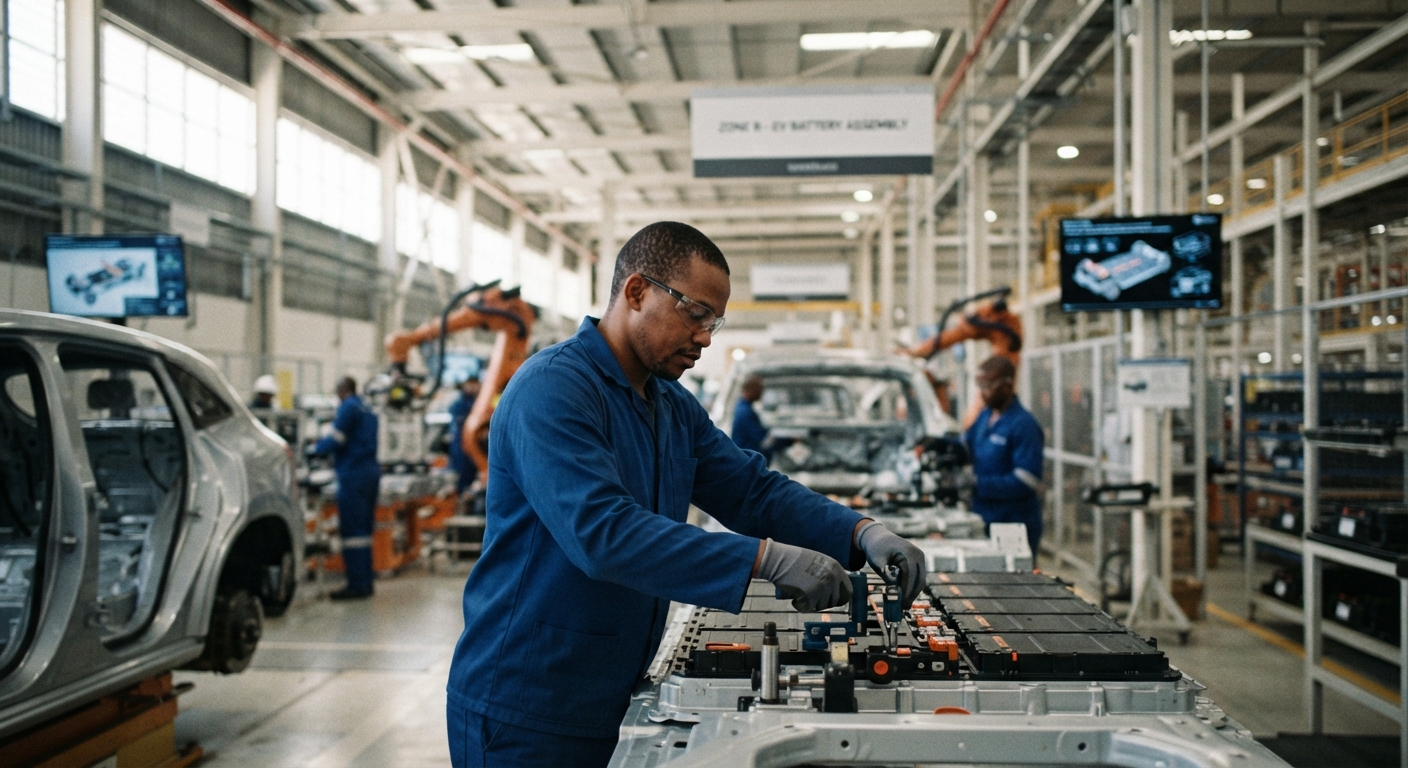
South Africa's automotive manufacturing sector, a cornerstone of its industrial economy, is undergoing a pivotal transformation. Major plants in Durban, Pretoria, and Gqeberha are actively upgrading their assembly lines, signaling a decisive shift towards electric vehicle (EV) production readiness. This strategic pivot positions the nation's key industrial hubs at the forefront of the global automotive transition, promising significant implications for employment, technological advancement, and export capabilities.
Re-tooling for Tomorrow's Mobility
The expansions are not merely incremental upgrades; they represent substantial investments in adaptable manufacturing infrastructure. "EV-ready" means integrating flexible assembly platforms capable of handling both internal combustion engine (ICE) and battery electric vehicle (BEV) architectures, or dedicated lines for the latter. This involves advanced robotics, new battery integration processes, and sophisticated quality control systems. Automakers like Toyota (Durban), Ford (Pretoria), and VW/Mercedes-Benz (Gqeberha) are at the vanguard, investing heavily in re-skilling workforces and future-proofing their operations against an accelerating global demand for cleaner transport. This proactive stance ensures South Africa remains a competitive player in the evolving global automotive supply chain, mitigating risks of becoming an automotive "orphan" as developed markets phase out ICE vehicles.Unlocking New Ecosystem Opportunities
The ripple effect of these assembly line upgrades extends far beyond the factory gates. South Africa's extensive automotive supplier network is now compelled to adapt, innovate, and re-tool to meet the demands of EV componentry. This presents a golden opportunity for local businesses to enter new value chains, from battery housing and charging infrastructure components to power electronics and advanced materials. Investment in local R&D and manufacturing capabilities for EV-specific parts will be critical, fostering an ecosystem that can support the new generation of vehicles. Furthermore, the push for EVs necessitates a parallel evolution in energy infrastructure, potentially stimulating investments in renewable energy sources and smart grid technologies to power these greener factories and vehicles.The Local Angle
This transformation is nothing short of a reindustrialisation blueprint for South Africa:- For Plant Leaders: This is about operational resilience, long-term viability, and securing market share in a global landscape shifting rapidly towards electrification. It demands strategic capital allocation, workforce upskilling, and integrating advanced manufacturing techniques.
- For Policymakers: The upgrades underscore the urgent need for a cohesive industrial policy that supports the EV transition. This includes incentivizing local content development, addressing energy security and cost, and formulating clear export strategies. The potential for job retention and creation, particularly in high-skill areas, is immense, but requires proactive governmental support in areas like R&D grants and infrastructure development.
- For Suppliers: This is a call to action and a window of opportunity. Companies must assess their current product portfolios, identify gaps in the EV supply chain, and invest in the necessary technologies and skills to become competitive EV component manufacturers. Early movers stand to gain significantly, potentially diversifying their revenue streams and securing long-term contracts.
South Africa's automotive sector is not just responding to global trends; it is actively shaping its future. By investing in EV-ready assembly lines, plants in Durban, Pretoria, and Gqeberha are laying the groundwork for a more sustainable, technologically advanced, and economically robust manufacturing landscape. This strategic foresight promises to drive South Africa's reindustrialisation efforts well into the 21st century.
Source: Auto Industry News